
When, why, and how to groom a dog can be confusing for new pet owners, yet dog grooming is an essential part of general pet care. You can easily learn to do it and with a little practice, do it well. There are plenty of books on dog grooming out there, but let's face it – they cost money, and sometimes are difficult to search through.
The All-in-One Guide: This “How to Groom a Dog 101” extensive and free course is for a complete beginner who's never groomed a dog. You will learn what factors to consider when deciding between a professional pet groomer and home dog grooming, the basics of grooming your dog at home and the foundation for becoming a knowledgeable, skilled, and understanding dog groomer.
Chances are your dog will love being groomed. Many of them do. If you learn to do it correctly, you'll avoid those situations where he can be hurt, and it will turn from a chore to fun for both of you.
Before you embark on your very first grooming adventure, we suggest you read through the whole guide for beginners. You’ll get a view of the entire procedure, insight into what you should expect, and an idea of what's out there. This will not prevent all potential problems and mistakes, but having an overview might eliminate a few of them.
Your best bet will be to read this material, and then refer to specific sections when you attempt to groom your dog.
This guide is aimed at complete beginners on their first grooming adventure and perhaps those who may have groomed their dog before but still have questions. And who knows? Maybe those who are already experienced will learn something too!
You’ll learn the very basics of how to groom your dog at home, and this will give you a foundation for becoming a knowledgeable, skilled, and understanding dog groomer in the future. Remember, even if you do take your dog to a professional, regular maintenance is also important — brushing, dental and ear care, and overall hygiene. These are all part of a dog owner's responsibilities.
If you are unsure of the details of a specific grooming task or if you need a refresher course, I suggest you review the the numerous articles on Dog Grooming this website has to offer. Top Dog Tips has published a lot of information on the dog grooming process, including:
- how to select dog grooming tools
- how to recognize behavior issues and how to handle them
- the proper grooming schedule for your pet
- how to perform each required dog grooming task
How to Groom a Dog 101The Largest Free All-in-One Course for Beginners
If you pass the test and find yourself more in love with dogs than ever, congratulations. There are many directions you can take with a love of dogs, and now is the time to explore this amazing hobby or profession , whichever path you choose. There are many great things to enjoy alongside your pooch such as dog photography, traveling, dog sporting events, hiking, bicycling, or practicing yoga with your pet, and so forth. It's an amazing world you're about to get yourself into.
YOU AND YOUR HAVE A LOT TO LEARN
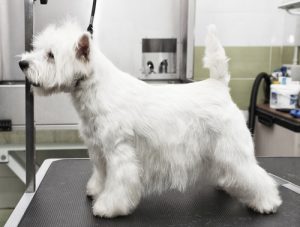
Have you ever seen show dogs being groomed? Or dogs groomed on TV? If that’s how you picture learning how to groom a dog is going to be — your pooch standing straight up, patiently waiting for you to finish grooming him — you can forget it. This will not happen any time soon.
Most likely, your first few sessions will be a disaster with a high probability that you’ll end up as wet as your dog. You should also keep in mind that show dogs are completely different, as well as the grooming procedures that go along with them.
Therefore, do not expect a pet dog to act the same as a show dog. They have extremely different temperaments. If you're looking to become a groomer for show dogs, then we'll have to point you in a completely different direction.
How to Handle Inappropriate Behavior You May Encounter
One thing many aspiring dog groomers forget to consider is the dog’s reaction that first time he’s put on the grooming table. Nobody — and I mean nobody — can predict how a dog will behave once you begin to groom him. Every dog is different, and only time and experience will teach you how to handle your pooch effectively.
Knowing what to do in the various situations that can arise in a grooming session is usually a matter of experience. But, you can make some preparations in advance by researching how different problems are handled by the pros. Combine that learning with what you know about your dog’s temperament and how he reacts to new things. Make plans in advance about how you will handle problem situations.
When you begin training your dog for grooming or begin that first grooming session, you may find yourself frustrated and angry with your pup’s stubbornness and seeming refusal to obey your commands. It’s likely you will have already experienced these reactions while working with your dog in training sessions for other commands.
This is another eventuality you can prepare for in advance when learning how to groom a dog.
You can’t let your emotions rule when training, and you can’t give in to his behavior. Plan how you will control your own emotions and how you will handle his misbehavior. Don’t give up. You cannot let your dog have his own way in this or in anything else.
However, if your pet begins to show signs of stress or distress, do not chalk this up to him simply being stubborn. This is his way of telling you that what you're doing is making him too upset, and that he cannot handle it. If this behavior is ignored, he will either try to bite you, become traumatized by the experience, or both.
When to Start Training Your Dog for Grooming
The earlier, the better. Ideally, you want to start learning how to groom a dog when your pooch is still a very young puppy. Training him when he's young will get him used to the process. There is a window of learning — until about 15 weeks of age — during which puppies will learn new things much more quickly. Experiencing something at this young age will make it less frightening when your dog is older.
Older dogs will be far harder to train for grooming (but not impossible), and there are some differences in rules and practices when handling older dogs who have never been groomed before. If you're interested in learning to groom an older dog, I suggest you either try a professional first (and ask questions!) or at least spend more time learning the basics and then educating yourself using an advanced dog grooming guide for all the little details.
If you have an older dog with a physical problem or injury, ensure that you are extremely careful. If this is your dog's case, bring him to your vet, and ask him or her how you could go about learning how to groom a dog safely. If you'd like a second opinion, or tips from one of the pros, visit your local grooming salon, let them know your dog's problems, and ask if you can sit in on Fido's session, to see exactly what they do.
Your dog's age isn't just a number!Puppies and older dogs behave differently when it's time to grooming them. So let's talk about young and old dogs.
GROOMING PUPPIES
When it comes to puppies, it's not just about keeping them clean, it's also about getting them in the habit of being groomed. The longer you wait to begin the grooming process, the wilder your puppy will be at his first grooming (and probably for several afterwards).
The best lessons are those learned early, and puppies are no exception. This is especially important in the case of ear cleaning and nail clipping, the two procedures dogs find most objectionable. By exposing your puppy to these procedures early, he will become accustomed to his ears and nails being handled.
WHO KNOWS? HE MIGHT ENJOY IT — WHO DOESN’T LIKE A DAY AT THE SPA WITH THE END RESULT OF LOOKING BEAUTIFUL?
Starting your puppy off on the right foot at an early age is the secret to successfully learning how to groom a dog. When you first bring a puppy home, begin picking him up and handling him everywhere. Handle his paws, inspect his nails, touch and look into his ears, lift his lips and inspect his teeth, stick a finger in his mouth and gently rub, and lift his tail to inspect his hindquarters. This will accustom him to being touched.
Try your best to ensure that anything related to grooming is a positive experience. We will expand more on how to make sure grooming is fun for your dog later, but note that socialization is a big part of it. Puppies need to be socialized with humans at an early stage for many different reasons, and one of those is so that you're able to groom them without running the risk of frightening or angering the dog.
Although, you should not be poking and prodding your puppy too much before he is groomed. This can lead him to feel tired and stressed about being fussed over this much. Don't associate prodding your dog constantly with grooming, and tone it down gradually as he ages.
The best age to begin learning how to groom a dog is around 6 months old. At this age, they are old enough to understand the importance, and are at an impressionable age where things will stick when it comes to routine. However, it's your job to keep up with this routine, with grooming at least once every two weeks – even if there is nothing to groom, play around with a brush a little.
With puppies, the key is to calm him down first. Gently restrain him for a few seconds and then give him a treat. Lower your voice and stroke him until he’s lulled into realizing that this is not playtime — at least, not in the way he’s become used to it.
Grooming a moving dog is dangerous. There are a lot of attractive but sharp objects. Calm him down by easing him into a quieter atmosphere. The “settle” command is a good one to teach and then use. By mastering that command, you and your dog will have an easier, more productive grooming session.
If your dog is jumping, barking, acting wild, or in general overenthusiastic, repeat the command “settle” in a calm, firm tone of voice. Don't be too loud — just say it firmly and clearly. Keep repeating it.
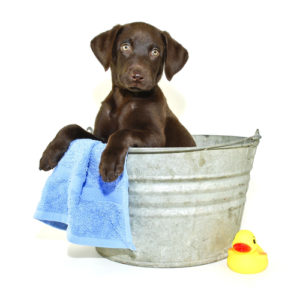
While you’re repeating the “settle” command, do not engage with your dog physically. Simply stand there calmly and do not react, even if he is jumping on you. This is a time where you do not want to make eye contact.
Even giving your puppy the evil eye won't help the situation, so avert your eyes and wait his behavior out until he's done. He’s probably going to keep jumping or barking just to get some attention, but if you don't reward the negative, attention-seeking behavior and remain neutral, he will calm down eventually.
Once he’s calm, reward him with a treat or praise delivered in a relaxed way so he won’t get excited again. Repeat this time after time until he begins to associate the command with the behavior expected. Once he’s achieved that, learning how to groom a dog will become much easier.
Your puppy may also be acting this way because he doesn't have a clue as to what you're trying to do, and is curious about what's going to take place. If you find that this does not work for you, and your puppy is still moving around, there is a trick that you can do to help get your puppy more familiar with what you're about to be doing.
Professional pet groomers allow dogs to see, smell and, sometimes, touch the grooming instruments. You'll see a demonstration of this in Samantha's video above on teaching your dog to enjoy grooming. This helps dogs of all ages become more familiar with the grooming tools, and they will be able to see that you're not trying to play with them.
If your puppy tries to grab, say, the nail clippers and pull them out of your hand, firmly tell him no, and move on to what you were doing, or planning on doing.
GROOMING SENIOR DOGS
Older dogs might be more nervous. If he hasn’t grown up being groomed, he’ll probably be a little intimidated. But because older dogs are less likely to be as excitable and rambunctious as puppies, calming him and making him feel at ease will likely be less work on your part.
Pet him and speak soothingly. Once he’s relaxed and seems calm and serene, start the grooming process slowly. You also need to check for signs of your dog becoming stressed out or frightened. If he has never seen the grooming tools before, or has never been on a grooming table, you can imagine he might become frightened.
DO YOUR BEST TO CALM HIM DOWN, BUT IF THAT DOES NOT WORK, DO NOT ATTEMPT TO GROOM HIM WHATSOEVER.
If you push your dog too far and groom him anyway, this will damage his mentality and cause him to be afraid of the grooming tools, table, and even you in the future.
You can try massaging your dog if he has aching joints. Warm water and a massage will probably feel good, and may help Fido relax before grooming. Make sure to talk to your vet about how to proceed. Not all dogs like it, especially if they have sensitive muscular or joint areas.
- BUDGET TIPS: 48 Ways To Save Money On Dog Grooming, Training & Supplies
Behavior Is the First Place to Start
A very important warning before we go any further with learning how to groom a dog…the most dangerous behavior a dog can exhibit during grooming — or at any other time — is aggression. Mild growling and slightly bared teeth might simply be his way of warning you about his discomfort at being groomed, but it's a sign that your dog doesn’t recognize you as the leader in this situation and is warning you to back off.
There's also a second stage of aggression where Fido will let you know very clearly that he will attack if you go any further. He will have his eyes fixed on you, and his mouth will be stretched and clenched while he growls at you with fully exposed teeth.
Stop!
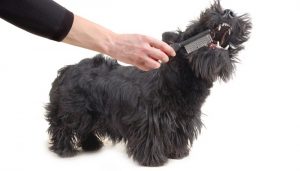
Move back slowly and put down any grooming tools you are holding. It's extremely important that your dog sees you putting down the pet grooming tools. Once you do, put your hands up so he can see that all of this is over, and you must leave it at that.
When he seems to have calmed down, move toward him slowly, always ready to back off again if necessary, and unhook him from any restraints. This is no time to try to enforce your command. Keep in mind that this may not be a behavioral problem on his behalf, but that he does not like grooming whatsoever.
Do not blame him for his actions and the way he reacted. If you have a dog with long hair, overgrown nails, or any grooming that absolutely must be done, bring him to your vet. There are vets who will lightly sedate your dog to get rid of the problem. For example, if your dog has bad matting, to the point where it's down to the skin and causing pain, your vet will lightly sedate him and get rid of the mats for you.
Aggressiveness needs to be dealt with immediately by a certified dog trainer, and we recommend that you participate in the training. A certified dog trainer will know how to retrain your dog to control his aggression and then will transfer pack-leader status to you when retraining has been successful. Once the aggressive behavior has been extinguished, you can try to learn how to groom a dog again with the advice of the professional.
Until you’ve both had professional training in handling aggression, don’t groom your dog. Let me say that again:
DON’T GROOM AN AGGRESSIVE DOG EVEN IF HE’S YOURS!
Have a professional do the grooming and warn the pet groomer that your dog may be aggressive.
Bring your own muzzle so that your dog is not forced to use what may be an unsanitary muzzle, one owned by the groomer or grooming shop and used on any dog who needs one. These muzzles have the scent of other scared and/or aggressive dogs embedded in them.
Keep in mind, if your dog becomes the slightest bit aggressive at the salon, you will get a call to come back and pick him up. Professional groomers will not risk their safety to groom an aggressive dog, and you will need to bring him to a vet as soon as possible. Because the vet will need to sedate him, you'll only want to do this if there's an issue with your dog's fur, nails, ears, or other areas that are causing him pain.
How to Handle Your Dog During Grooming Sessions
Of all the things in the world, you are what your dog finds most comforting. He will look to you if he’s in any kind of distress, and it's important to make sure you know how to respond in a calm, constructive manner. Your dog will take cues from you.
We've all experienced times when dogs refuse to do what we want them to do. Be ready — this will probably occur repeatedly when you're first learning how to groom a dog. Your dog may obstinately refuse anything and everything you want him to do, but handling this behavior is part of learning how to groom a dog.
This cannot be stressed enough. If your dog is showing signs of fear, anxiety or extreme stress, you need to stop and give him some breathing room. Remember to give him small breaks in between procedures, and if he does not calm down whatsoever, stop the grooming and let him be.
FIRM, CLEAR INSTRUCTIONS AND EXPECTATIONS
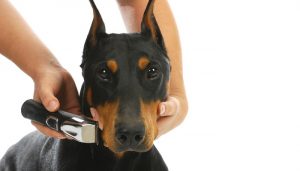
Be prepared to handle your dog firmly. Dog grooming involves things like running water, sharp pet nail clippers, scissors, other strange tools, and soaps and conditioners that may feel strange. Many of these unfamiliar things can represent potentially hazardous situations for both of you.
You have to be confident and know that you can control your pooch, especially when he is confronted with tortures he already knows he dislikes.
Allowing your dog too much freedom is dangerous for both you and him. He doesn’t understand what can hurt him or you, and his behavior can be unpredictable. Set boundaries, and remind him that you are the boss and he must listen to you.
Don't be rough. Try to make grooming sessions a pleasant experience for both of you, but let him know you’re in control and he must do as you say.
Whenever he looks at you with a look that says, “am I okay?”, simply smile, pat him on the head, and get back to grooming. Do this as frequently as you have to, as he is asking you if what you're doing is okay. He will feel more safe and secure knowing that you are acknowledging him in such a way. However, if he begins to struggle, be sure that you are firm when you tell him to stop.
ESTABLISH YOUR LEADERSHIP
Leadership is the key to controlling your pet when learning how to groom a dog. If he’s been properly trained, you shouldn’t have to show dominance. He should already know that you’re in charge. But this can be a frustrating time, new to both of you, and important parts of training can be lost or at least overcome in this frightening situation.
You don't have to yell, and of course, you wouldn’t hurt your dog. What you do need to do is remind your pet that you are the leader and he must listen no matter what. Continue to encourage positive behavior and reward your dog when he does things right.
In most circumstances, you shouldn’t avoid or move on to the next step if he has done something he shouldn't or refused to do something he should have done. Ignoring a problem will only make it more difficult to fix in the future.
When you see that your dog would rather die than get wet or have a bit of his hair cut, do not force him. There's a fine line between expecting Fido to follow your commands, tolerating his behavior because you see that he’s scared, and handling him if he becomes aggressively angry.
WHEN YOUR DOG IS IGNORING YOU
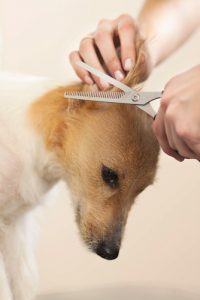
If he’s ignoring your commands, this may be more than a grooming issue. If you’re at a point in the grooming session where you can stop, take him out of the grooming area and take steps to reinforce your role as leader.If he's scared, end the grooming session right away.
Continuing while he is scared will damage how he views you, and will traumatize him further. Again, do not keep going, stop immediately whenever he becomes scared.
BE CONSISTENT WITH GROOMING
Dogs are creatures of habit, and it's easier to get their cooperation if they know this activity is part of a regular routine and it's done the same way every time. Consistency gives your dog a chance to learn and understand how the process works and will ensure that he understands what is expected of him at any particular point.
When learning how to groom a dog, quickly develop your own system for handling your pooch with the most efficiency, and stick to that system. Hold him the same way every time you clip his nails. Always put him in the same position when you're cleaning his ears or brushing his teeth. Consistency is key!
DON’T BACK DOWN — RULES ARE RULES
A dog who thinks he can have his own way presents a danger for everyone involved in the grooming process. One of the biggest problems professional and home dog groomers face is a spoiled dog. A dog who has been taught that he can do anything he wants is every pet professional's nightmare, so make sure you address this at the very beginning.
A WAR OF WARNING
If you use a professional groomer, be alert for sleepiness or lethargy after grooming. That may sound odd, but it's not. While a dog might act a little playful after being at the groomer's, sleepiness can be a sign that he or she was given a sedative without your permission.
If that's the case, your dog could be in danger. Giving a dog a sedative without the owner’s permission is dangerous. This wouldn't have been an issue years ago, but it has surfaced lately. If you take your dog to a professional groomer, make sure you specify that you do not want him sedated, and be alert to his behavior when you bring him home.
How Do You Make the Grooming Process Fun?
Unfortunately, dogs do not understand all of the health benefits of grooming, and they can protest, strenuously at times. They might hate the water, the buzzing of clippers, the touching of their paws and nails, the wiggling around in their ears, or the brush in their mouth. More than likely, they’ll hate all of it, and it's not difficult to see why.
To decrease the potential for grooming disasters when you're learning how to groom a dog, attempt to make it as fun for him as possible. It takes creativity and imagination to find ways to calm Fido so he can enjoy the grooming session. Nobody knows your dog better than you do, so use your best techniques to calm him before you begin grooming him.
Go slowly — no sudden moves — and communicate calm and confidence to him throughout the process. This is crucial in the beginning. Don't be afraid to play with your dog for a little while before, after, and maybe even during grooming (if it's safe). Be aware of the tone and volume of your voice when you issue commands. Have treats ready and reward good behavior. Don’t yell or punish.
MIND GAMES WHEN GROOMING YOUR DOG
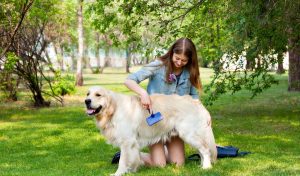
Use a small mind trick on your dog, but don't mess with his head. This will confuse him and, more often than not, cause him to become distressed. Dog's are smarter than you think, and they will eventually figure out that you are just messing with them, which is cruel.
Take some hints from the great psychological masters and teach your dog to associate grooming with something he really likes (aside from you, of course). Using positive reinforcement when teaching a dog to endure grooming is the best way to accustom him to it.
If you need to, review positive reinforcement techniques before you begin grooming and continue to use them each time you groom. Use rewards to encourage your pooch to do what you want him to do.
Doggy psychology is a fascinating thing. Dr. Stanley Coren, Ph.D., did a study on the effects of positive versus negative associations on a dog. In the context of grooming, an example of negative reinforcement could come in the form of punishing your dog when he acts up during grooming (whining, nipping, running around, wreaking havoc in general), while positive reinforcement is based on rewarding your dog when he follows your command and behaves appropriately.
Dr. Coren found that dogs react better to positive reinforcement than to negative. He distributed questionnaires to 364 owners and asked about their behavioral method for training their dog. His survey indicated that dogs perform far better when they were positively rewarded than when they were negatively punished.
Their behavior and obedience improved when they were given a “prize” after doing something correctly. So, science proves it – positivity is the way to go with your pet, not just when learning how to groom a dog, but in all of dog training as well.
TRY DOG TREATS ON HIM

If your dog likes a certain type of dog treat, have that treat ready when you're learning how to groom a dog. Give it to him at the very beginning of your grooming session so that he’s immediately at ease and every time he does what’s expected of him but not when he doesn’t.
If you also give him a treat when he misbehaves, he won’t learn which behavior is right and which wrong. Keep the positive association between grooming and treat time clear, but be reserved if you notice that there's a pattern between behavior and treat.
OUR DOGS CAN PLAY US LIKE FIDDLES IF WE'RE NOT ON OUR TOES.
Try having a treat in your dog's line of sight, so he knows that it's there for when he's being good. This will show him that you are prepared to give him more, but only if he is good while you are grooming him.
However, treats aren't for every dog. If your dog has a weight problem or some other issue that requires him to take it easy on the snacking, there are some healthy options for treats that are organic and delicious.
TRY PSYCHOLOGICAL REWARDS
Build up your dog's ego. Talk calmly and soothingly, praising him and reassuring him about how well he’s behaving. Dogs read our cues very well. If you rush the grooming session or if you’re silent, your dog may become uneasy. But if you praise him and give him treats, he may assume that grooming is actually a good time. I mean, who doesn't like being fed and told how awesome you are? Starting this psychological association early will save you a world of trouble as you progress in your dog's grooming care.
There's a distinct way you should give praise if you're rewarding a dog for being calm versus trying to coax a nervous dog. If your dog has finally managed to sit still for a second and you want to reward her for it, make sure the praise is given in a pleasant, even tone.
You want your dog to be calm and collected, and if you are too excited and vocal, he might become overly enthusiastic as well. If your dog is fearful or nervous, adopt a kinder, more coaxing tone of voice like one you would use with a child. If he’s scared, he won't be rational, so assuring him that everything is alright and he’s okay is an important step to keeping him calm and safe during grooming.
Other tips for calming down a nervous dog include ignoring hyper behavior — no treat, of course. If you reward your dog for his hyper behavior, he will continue it.
Exercise lets out a lot of pent-up energy, and if your dog is impossible to work with, getting him outside and moving will help take the edge off his overabundance of energy. It might be worth taking the time and delaying grooming just to do that.
Problematic Behavior You’ll Encounter and What To Do About It
As a dog groomer, you will often face dogs who misbehave. Even your own dog whom you've trained and groomed for years can occasionally throw a fit. You should know how to deal with this and take the most appropriate course of action in those situations.
All dogs will suspect something fishy, but their reactions will be different. Your goal here is to find a way to counteract their inappropriate behavior effectively and get the grooming session started, unless they show signs of being fearful or overly stressed out.
It’s foolish to think your dog will cooperate with you when you're just learning how to groom a dog. It is during these first grooming sessions that you will find out your pooch’s true character and just how stubborn he can be. It's not his best side, nor would it be ours, but it's one we all have.
IF YOU HAVE A DOG SITTER
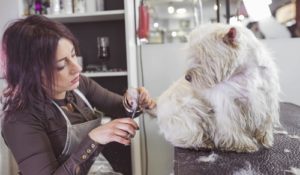
There are dogs who will sit down and refuse to stand no matter what. He will stubbornly avoid being moved by placing his behind in one spot and “playing dumb” when you command him to stand. Stand? What’s that? He’ll look at you innocently, but he won’t move.
He’ll make every other kind of movement though. He’ll duck his head or turn away when you try to wash his face or his ears. He’ll tuck his chin into his chest and refuse to let you get to his throat and shoulders.
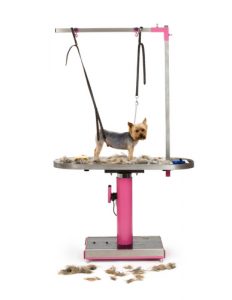
There's no magic technique when learning how to groom a dog who sits and refuses to stand. You can use restraint loops for your washtub or pet grooming table. One loop goes around your dog’s neck, and the other goes around his waist, just in front of his hindquarters. This prevents him from sitting and holds him in place while you’re grooming him.
Or you can try an end-around, by washing him in sections. We’ll give more detailed washing instructions later, but the principle of washing a sitting dog is to let him sit while you work on all of him except his belly and the insides of his back legs. First soap his back from his neck to the end of his tail.
Wash around his neck and collar area and then the top of his head. Put him in a gentle headlock if necessary and wash his face. Don’t allow runoff from the top of his head to run into his face or eyes, but the cloth you use to soak up the run-off will contain enough water to wash his face, and hopefully he’ll think you’re drying his face rather than washing it. Then wash his chest.
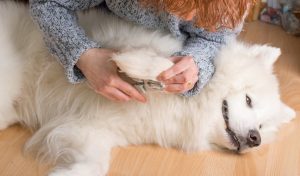
If you should happen to get water in his ears, grab a cloth and wipe them out immediately. You should never, ever, wash your dog's ears while he is in the bath. If too much water gets into the ear canal, or any at all, and you do not immediately get it out, you're risking an ear infection. You should be cleaning your dog's ears separately with either a wash cloth or some cotton balls.
Now wash his belly. Gently encourage your dog to stand up by placing your arm underneath his belly and lifting. He will be eager to sit down as soon as possible, so work quickly with one hand while holding him up at the belly with the other.
Repeat the above if you think he needs to be washed again. If not, rinse him all over, starting at the top of his head — make sure you’ve rinsed out all of the soap residue. When you’ve finished rinsing the top half, lift him in the same manner as you washed him and rinse his belly and the inside of his back legs.
Apply conditioner and rinse it out, following the same steps you used as you washed him. Be sure that you rinse him thoroughly this time, especially his belly and the insides of his back legs, and then rinse him again to make sure. Soap and conditioner can be very irritating if left in your dog's coat.
IF YOUR DOG LIES DOWN
You know what's worse than a dog who sits during grooming? A dog who lies down. Similar to obstinate sitting, your pooch will lie flat on his belly the minute you put him into the washtub or onto the grooming table.
Picking up a dog from a prone position is not as easy as picking up one from a sitting position, and chances are he won't like it. But you can’t do much grooming when your dog is lying down flat in the tub or on the table.
Before you go any further, check with your vet to see if this is a physical problem, or just a case of not wanting to participate because of being sleepy.
To remedy this, you could consult an animal behaviorist and spend what will probably end up as a great deal of time training him. While he definitely needs the training, you have to get him clean in the interim.
Forcing your dog to stand by picking him up and then watching as he immediately lies back down as soon as you let go with one hand to reach for something you need is very frustrating. I bet you'll get tired before he does. Until you and your “exhausted” dog get that training, you can use restraints as described above with sitting dogs and wash him in much the same way.
THE KAMIKAZE DOG
With some personality types, using grooming loops might just push your dog over the edge…literally. Once you get your dog on the table and attach the loop around his neck, the suicidal dog will start hanging himself by pulling as hard as he can, sometimes right off the table.
Neck restraints tighten as the pressure is increased, and with most dogs, this is enough to get him to stop pulling, but the suicidal dog would rather die than endure another minute — or even the first minute — of grooming. At this point, you may question his intelligence, but his fear and adrenalin are such that he probably won’t notice the pain. Make no mistake — he’s hurting himself.
The best way to approach this type of behavior, is to stop immediately and call the owner. Or, if this is your dog, stop immediately. If you bring a suicidal dog into a professional grooming salon, you will get a call from the groomer to come back right away.
This type of behavior is not accepted in a grooming salon, and you should never attempt to groom a dog who is trying to harm himself during the process. Even though he may need work done, keep him out of the salon.
Nothing good will come from this behavior at all.
If grooming is absolutely necessary and cannot be avoided, bring your dog into the vet and let him or her know what is going on, what can be done to help, and what you can do for your dog. Ask about a sedative, or another solution that could do the trick.
THE JUMPER DOG
Some dogs are brave enough to attempt the great escape with a Steve McQueen-like jump. The minute you put him on the grooming table or in the tub, he’ll find a space through which he can jump straight past you and run for dear life. What's even more frightening (and again may make you question your dog’s intelligence) is that he will do this every time you manage to get him back in place.
Just like the suicidal dog, your dog may not be aware that he’s been placed in the grooming loop and that if he jumps while it’s around his neck, it can cause serious injuries or even death. He can also be seriously hurt simply by jumping off something too high. Watch out for this behavior when grooming your pooch.
The best way to deal with a dog trying to do a Steve McQueen, is to wait and see if he will calm down. Waiting out this behavior is all you can do. If the behavior continues, however, you should not groom the dog. You should never turn your back on a dog with a noose on a grooming table, but you cannot always have your arms around him to keep him from jumping, especially during the grooming process.
If he does not stop, you'll need to watch him constantly — never take your eyes off him — and firmly stop him from jumping as soon as you see the warning signs. Perform your grooming sessions in a way that you can always be close and stop him from jumping.
Behavior You May Think Will Help
Some dogs do behave in ways that allow even the first-time groomer to sail through a grooming session with ease. Strangely though, this type of behavior needs to be addressed properly as well for your dog’s comfort and to ensure smooth grooming sessions in the future.
There are several types of behaviors that your dog can express which one might consider positive, at least in comparison to the problematic behaviors discussed above. They are the result of your dog’s perception of you, how you have trained him, and what he expects from this grooming session.
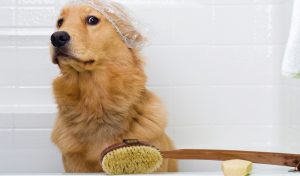
It could be that your pooch will take the very first grooming session pretty well. But, if you have not acknowledged his good behavior with lavish praise and treats, he’ll make sure to turn your future sessions into a trial of your skill and his determination and athletic ability. It's very important to reward your dog's positive behavior.
You may be wondering, “why is my dog responsive to commands the first time he’s groomed?”
While you may be thinking that this is a good thing and is a sign of easy grooming in the future, it could actually be a negative sign. Does your dog fit into one of the following categories?
1. HE MIGHT BE AFRAID OF YOU!
Dogs who act very submissive or fearful of you can be very easy to groom, but this behavior is not healthy. If your dog is really scared rather than submissive, his fear may eventually turn into aggression. Fearful submission to you is not what you want.
Once your dog goes into submission because he is scared, you need to stop right away. By going further at this point, you will only traumatize him and make him scared of you, period. Nothing good will come of that, and he will turn aggressive toward you soon after.
Do everything you can to make your dog more comfortable:
- Go slowly — no sudden movements, don’t try to intimidate him by staring him in the eyes, and don’t yell at him or threaten him.
- Pet him, talk soothingly to him, rub his belly, scratch his ears, and use treats and positive reinforcement.
- Introduce each grooming step slowly but with confidence.
- Be very gentle and patient.
- Try to turn the grooming session into a pleasant experience for your dog so that he's not as afraid at the next grooming session.
- Try to coax him into enjoying the experience rather than tolerating it out of fear of you.
2. OH, BOY! RECESS!
Some dogs enjoy the grooming session so much that they play the whole time. Consider yourself lucky. Humor him occasionally when he acts like this, but stay strict in terms of what you need to accomplish and the commands he needs to follow.
A DOG’S PLAYFUL MOOD, WHILE ANNOYING AND UNHELPFUL SOMETIMES, HELPS GET HIM TO DO WHAT YOU WANT WITHOUT FEAR OR AGGRESSION.
If your dog acts as if this is a new game, play with him for a short time before the grooming session. Take a break in the middle to play a little as well. Save the best and longest games for last, so that the memory he takes away from the session is good. Your pooch will be more likely to associate grooming sessions with fun, making the following sessions easy.
3. HO-HUM
A dog who doesn't care, who seems oblivious to the whole grooming process, can be a tad boring, but he’s every groomer's dream. Many groomers try to train dogs to behave like this, and if they’re professional groomers, they’ll sigh with relief when grooming a dog whose owner has taught him this response.
If your dog has this type of behavior, you need to watch him closer than you think. He may be trying to enter his happy place because this is too much for him. If his breathing is too slow or too fast or he is slightly trembling, stop immediately.
He will not move much and will seem to be off in his own world – calm and dreamy. He will follow your commands easily, and sometimes you won’t even need restraints to hold him (but make sure you have some restraint device available just in case he’s playing possum). Take care, however, not to startle the oblivious dog. If you suddenly wake him from his dream state, he may respond with an attempt to escape or with aggression.
Dog Grooming Supplies You'll Need
Grooming your dog is not something you just walk into with your bottle of dish washing detergent, a hose, a brush and comb, your blow dryer, and your dog. An effective, stress-free, and productive grooming session requires preparation. You need to know what to expect, how to prepare your dog for the process, and have the right supplies on hand.

The equipment you use is just as important as your technique, so be sure to look for well-made and high-quality products. It will help you avoid hurting your dog, which will interfere with grooming now and in the future, and prevent damage to his coat.
In general, there are several manufacturers of reliable and well-reviewed products. In my opinion, you can generally trust Andis, Four Paws, FURminator, and Safari.
- Refer to the recommendations given later in this article, but do your research and experiment with different brands to find the best products for you and your dog.
Grooming combs, brushes, and specialized tools
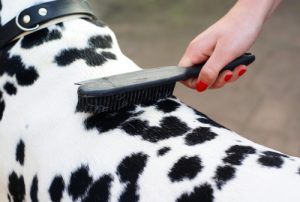
A good brush and comb are the most basic tools for dog grooming. There are many different types of dog brushes on the market, and some do more than simply brush. Bristle brushes can be used on all dogs while pin brushes (brushes with wire bristles, some of which have a cover over the tip of each bristle) work best on long or curly coats. Slicker brushes help remove mats.
You can easily find combination bristle and pin brushes, one type on each side of the head of the brush.
Combs are generally used in the final stage of grooming to remove loose hair and fleas. The teeth can vary in length among different combs, and the distance between the teeth of a comb can help you determine which will work best for your dog. Generally, a coarse comb works well with long-haired breeds while a fine comb works best with the smaller breeds or ones with fine hair.
Make sure you use the correct brush for your dog's coat type. If you make the wrong selection, you may end up causing your pet pain. For example, if you use a bristle brush on a dog with short hair, it's going to irritate his skin.
A detangling or de-matting tool, also known as a rake, is a must for medium to long-haired dogs and for some short and curly coats. A mat rake generally has several tines placed at an angle so that the tines can get between the mat and the dog’s skin.
A razor blade behind the teeth slices through the mat, making it easier for the comb and brush to tease out the tangle. The use of a detangling spray during regular brushing helps keep mats from forming while de-shedding tools remove hair that brushing may have missed.
Dog hair clippers

A set of clippers is a necessity for dog grooming if you plan to do more than brush and comb your Fido’s coat. Clippers come in two types: electric and silent. In my opinion, electric clippers require the most research before you choose a set.
Do not buy the cheapest set you can find. Believe me, you’ll suffer for it in time, frustration, and your dog’s fear and perhaps even injury.
A professional set of electric clippers can be quite expensive; however, a quality set made for home use does not cost quite as much and usually pays for itself relatively quickly by eliminating the need for expensive professional grooming. Clippers with a silent mode help ease your dog’s fear of the noise made by electric clippers.
You're going to have to constantly watch the clipper blades, because they will get hot. The best way to keep tabs on how hot the clippers are, is to touch the blade with your hand every couple of minutes during the grooming process – too hot for you, too hot the the dog, plain and simple.
Silent clippers, one type of which look likes a pair of scissors with a comb attachment, are a little more labor intensive. While they don’t make noise, it takes longer to completely clip your dog. During this time he may become restless. But, for the dog who is afraid of the sound of the motorized clippers, this option causes much less anxiety and allows you to finish the job without terrorizing your pet. They're great for quick touch-ups too!
As an aside, don’t clip your dog’s coat to the skin. A dog’s coat helps protect him from sunburn and acts as a temperature-regulator to prevent him from overheating (or freezing for that matter). If your vet advises that your dog be clipped drastically, this should be done by a professional groomer to prevent injuries.
“A dog’s coat is kind of like insulation for your house. Insulation stops your home from getting too cold in winter, but it also keeps it from overheating in summer—and your dog’s coat does the same thing”. – Dr. Louise Murray, Vice President of the ASPCA Animal Hospital
Once you have clippers, you will also need to begin looking at clipper blades. If you have a dog with short hair, skip this part. If you have a dog with long hair, or a dog with hair that grows out and requires shaving, then you will need to look at the different types of clipper blades.
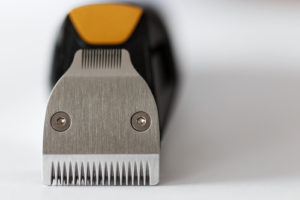
10 and 15 blades are the standards when it comes to clipper blades. A 10 blade is used for areas such as the face, the anal area, ear area, paws and the legs. A 15 blade is used for the body.
Next, you will need to look at finishing blades. An F10 is used to finish the area of the dog that you used the 10 for, and the F15 is used for the places that you used the 15 blade on.
You need to use the clippers on the dog before you bath him, not after. Once you have shaved the dog to your liking, give him a bath. Now, get your finishing blade going. Clipping with a finishing blade after a bath will help you get all of the spots that you missed, which you would not see before you gave him a bath.


No comments:
Post a Comment